Will Spam Turn Mobile Users Off?
It has been said that 97 percent of text messages are read within four minutes. In fact, we know that many are viewed in a shorter window than that. If we’re not those people ourselves, we have likely experienced family members, friends, and others rudely take themselves out of a conversation to respond to the bing or ding of their phones.
Beyond a lack of manners, what’s behind this behavior? Much of it has to do with the value placed on a text message. Unlike email, the vast majority of texts either are from people we know or solicited by us through membership in permission-based, mobile clubs developed by brands, politicians, and others.
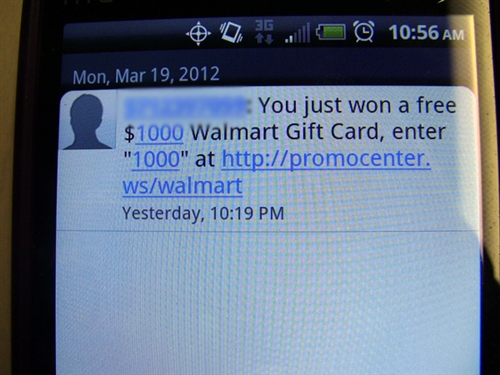
That is changing. According to an 1,100 word story in the New York Times, spam is becoming more pervasive on mobile devices. The Times said that in the United States, consumers received roughly 4.5 billion spam texts last year, more than double the 2.2 billion received in 2009, according to Ferris Research, a market research firm that tracks spam.
That is 4.5 million in a year spread out over 250 million text-enabled phones, according to the Times.
Does this problem compare to what we see in our email inboxes? Hardly.
Israeli Internet security developer Commtouch reports that we receive an average of about 4.5 million spam emails approximately every 90 minutes.
Just what are the implications of a doubling of spam on mobile devices?
If we continue down this path, many mobile subscribers will consider texts an intrusion and ignore them.
Marketers who have succeeded in providing value to consumers who opt into mobile programs will suffer the consequences of a less attentive audience.
The mobile operators may see a drop in messaging revenue. Imagine how many will say no to the text option if the alternative is incessant and unwanted SMS.
As the Times reported, mobile spam is illegal under two federal laws — the 2003 Can Spam Act and the Telephone Consumer Protection Act, which set up the Do Not Call Registry in 2003. Smartphone users can report numbers that spam comes from on both the Web sites of the F.T.C. and the Federal Communications Commission. The major wireless carriers — AT&T, Sprint, T-Mobile, Bell Mobility and Verizon Wireless — all also offer ways to report the numbers on their Web sites and can block numbers.
It is up to the carriers to enforce the laws and quickly shut down the spammers whether they are smishing (illegally seeking personal information) or marketing outside the rules.
Anything less than vigilance will turn off consumers and the route to them.
-
Article first published as Will Spam Turn Mobile Users Off? on Technorati.
Notes From a Mobilized Marketer - The Kleenex Edition
The msnbc.com story said that the iPad is to tablets as Kleenex is to tissues. To me, this thinking is premature.
Speaking of tablets, will a two-month delay to July push Google's first one to $200? The need to be more efficient to move the price down has reportedly been deemed more important than time into the market.
I still believe that Philadelphia's walking lane for texting was a keeper. It was only in place around April Fools Day. While we’re at it, we need one for elevators and another in airports.
Approximately two billion Facebook posts per month include a geolocation tag. Of course, it’s not only about what you say but where you say it.
Did you hear the NPR piece on phone tracking? The question was whether the carriers are selling private records to law enforcement. It seems to me that the answer is yes despite the fact that the mobile operators don’t want it called selling.
This from a memo from Yahoo’s CEO Scott Thompson – “Our users want fun, informative, engaging experiences on all screens.” Does this signal that the company will finally seriously integrate mobile?
I'm all about new media but Vin Scully took me back 45 years with his call on Opening Day. He was so good describing the baseball game that I barely picked my head up to watch the game in HDTV.
The latest proof that it’s not our grandparents' world? About 29% of those who read ebooks consume them on cellphones.
Consumers don’t engage with channels, they engage with the brand, said a Walmart executive at a conference. Further, make the experience as seamless as possible, he said. I couldn’t agree more.
For a peek into several sections of my nearly released Mobilized Marketing book, please see the Inside This Book section on my Amazon book page.
Assuming the rumor is true, I would like to know why Apple thinks a 7.85 inch iPad is the right size. I’m disappointed that it's not 7.97258 inches. Call it isanity.
Notes From A Mobilized Marketer - The Google Glasses Edition
I’m vain enough to wait for augmented reality contact lenses. I say no to Google glasses.
The Masters switched to a free iPad app this year. Surprising given the organizers live in another age on so many issues.
There are enough mixed reviews of the Nokia Lumia 900 that we'll have to see for ourselves. So much is riding on it for Nokia and Microsoft.
Nokia’s 41-megapixel camera has come to America, but you can't buy one. It’s ironic that the company’s show-stopping innovation can't be marketed.
You now can take a picture of junk mail with PaperKarma and an app unsubscribes you. I love mobile.
Shazam says its gets more activity during live TV than Facebook and Twitter. It attributes it to the availability of "bonus content". Isn’t that what we get from our social networks? Or should?
"Listening, invention and personalization" are essential to Amazon's mobile strategy, according to the company. It’s essential for everyone else, too.
On the first day of availability, there were 2,000 downloads a minute for Instagram for Android. Want another wow? Overall, there are 30 million users uploading more than five million photos each day.
Thirty-four percent of surveyed high school seniors own an iPhone, double the percentage of year ago, according to Piper Jaffrey. Even more intend to buy. Some believe the device isn't cool enough for teens. It’s time to rethink that. Also, the implications for other manufacturers are obvious.
Seventy-one percent of iPhone users employ Wi-Fi versus 32 percent for Android owners, comScore reports. The disparity supposedly had to do with overseas data plans that limit Android connections that way.
The only saving grace about the absurd speculation on the iPhone 5 is that it takes attention away from next iPad.
Save May 15 for the next Mobile Mixer, hosted by Hipcricket in our Kirkland, WA, offices. We’ll be talking about the learnings from my Mobilized Marketing book.
I’m amused that every mobile wallet announcement is judged as end-all or not. This is a long-term play, 4-6 years for the tipping point, according to American Express.
Will Balloons In Bed Lead To Sales Pop?
Digiday asked me to assess two current mobile advertising campaigns. Each targeted smartphone users.
My critiques are below and at http://www.digiday.com/brands/campaign-breakdown-westin-hotels-activision/
-
Westin Hotels & Resorts’ “Elements of Well Being”
Westin Hotels & Resorts used mobile display advertising to extend the hotel chain’s “Elements of Well Being” into the mobile space. The goal was to drive brand awareness and preference with on-the-go travelers. The ads were targeted to high-end smartphone devices and ran on premium sites predetermined by Westin.
A shakeable ad unit was launched. The creative used images from Westin’s “Elements of Well Being” campaign that demonstrated the hotel’s ability to better understand human needs and engineer a hotel experience ‘For a Better You.’ It featured the Westin’s SuperFoodsRx Menu, Heavenly Bed and Westin Resorts. The unit put consumers in control of the various images and allowed them to change the creative displayed by physically shaking their phone.
Another creative unit featured a screen full of balloons, which users could “pop” by touching. When every balloon was popped, an image was revealed of a woman lying on a bed of balloons, symbolic of how Westin has engineered a good night’s sleep through the Heavenly Bed. The units resolved with a complimentary night offer which users could click to call Westin reservations directly or book via a mobile landing page.
Assessment: Mobile display advertising makes sense if the target is a frequent traveler who most likely is carrying a smartphone. The shakeable component is a gimmick that I’d prefer seen left out. As a too-often business traveler, I do enough shaking with the necessary amount of coffee to jolt awake the system, the turbulence that rattles the nerves, and the worries about the 25-minute layover. As to other elements, I’m not sure what to make of the woman lying on balloons image. Provocative, sure, but unconvincing that the bed is made for the best night of sleep imaginable. Plus, the payoff of a free night surely pleases many, but I bet an upgrade offer would be more appealing to the business traveler who undoubtedly is on an expense account.
-
Activision’s “Call of Duty: Modern Warfare 3” ads
Activision’s mobile campaign for “Call of Duty: Modern Warfare 3” aimed to drive pre-orders ahead of the game’s release date and generate awareness and social media buzz.
Activision ran mobile media ahead of the game release. The campaign featured rich-media creative that was targeted to highly male environments and included a video trailer that showed highlights of the new game and an exclusive ad unit that enabled click-to-store functionality.
The campaign leveraged mobile commerce to allow consumers to pre-order the game from Amazon.com directly on their mobile device. The creative also helped drive in-store traffic by featuring a store locator that enabled consumers to find the nearest location where they could pre-order.
The campaign included an expandable banner that allowed users to tweet to the official Call of Duty handle directly from within the creative. Users could also share the rich-media trailer via Facebook.
Assessment: For such hot game titles, there is another kind of modern warfare — the kind between the online seller and the brick-and-mortar retailer. Activision wisely gave the mobile user choice although I’m not sure why someone would travel to a store for a pre-order when he or she could accomplish the same activity from wherever they are. The tie-in of social and mobile is a winner because it easily enabled the mobile subscriber to build buzz for the game. Missing was a check-in component that might have created a Call of Duty community that Activision could cultivate.
Notes From A Mobilized Marketer - Of Reverse Mentors and Old Socks
Beyond anti-wrinkle cream and eyelash enhancements, I’m staying young through reverse mentoring. A 29-year-old is co-architect in many of my new media efforts. Plus, last week, I learned lots about social from a 25-year-old who is as old as many of my socks.
My brother followed this course recently when he received advice on setting up his wireless router from our 12-year-old nephew. My bet is my brother was wearing 12-year-old socks that day.
I received texts three straight days from the Obama campaign. Yes, I opted in, but the frequency is way too much, especially this far from Election Day.
Next year they should do Day of Unplugging on April Fool's Day. Then I'm in.
The NPR April Fool's headline said Tweets To Shrink To 133 Characters. That’s nothing to joke about. Our full voices will be heard.
According to several studies, more than 70 percent of mobile users say they want a deal. Yet LivingSocial is away moving from offers to push convenience in the form of takeout and delivery. I’ll take 25 percent off in exchange for a relatively short wait. And I’m far from the only one.
Is there an app to get my wife to go with me to new Three Stooges movie? I hear that there's Oscar buzz around this one.
Groupon restated its earnings after seeing a spike in holiday returns. I contributed by giving back two of the three flying trapeze lessons my “friends” thought I would enjoy.
Some (not me) say the best days for text messaging are over. A posted column said that SMS is a "new global phenomenon”. It is at neither extreme.
Two thirds of mobile devices purchased in last three months were smartphones. Has your marketing shifted similarly?
American Express says that mobile payments are 4-6 years from a tipping point. The contrast to the hype around the concept is striking – and accurate.
AT&T says its Nokia Lumia 900 launch will be bigger than an iPhone introduction. It may be in marketing dollars spent, but certainly won’t be in excitement generated.
Stepping Into The BlackBerry Time Machine
I stepped into a time machine this week, reliving history by seeing several Washington D.C. exhibits and more BlackBerry devices in hands than iPhones or Androids.
Because you come to this blog for mobile insights rather than my take on the political contributions of our forefathers, let me offer some thoughts on RIM’s continued large presence in our Nation’s Capital:
Seemingly most in DC wield power or are wannabes. There is no better device to bang out power emails than a BlackBerry. In other cities, we want to be cool. In Washington, power wins out.
No one does push email better than BlackBerry. In Washington, time is critical. What better device to keep track of the political flip-flops?
Long ago, the BlackBerry proved to the IT departments that it provided secure communications. There is no city in America with more need than DC for protected emails.
I had a long love-hate relationship with my BlackBerry that I wrote about here http://technorati.com/business/article/an-open-letter-to-blackberry/ and elsewhere.
For several years, I carried an iPhone and BlackBerry. Price finally drove me away from RIM. Despite the fact that I’ve been a customer for about 15 years, AT&T demanded for $50 more a month when some of my emails were switched over to Microsoft Exchange. These are the same emails that my iPhone delivers for no extra charge.
I miss the keyboard and the push capability that RIM gave me.
I don’t miss having to defend carrying what has become a dinosaur outside of DC.
Notes From A Mobilized Marketer
A report says that there were 30 million near-field communications-enabled smartphones shipped in 2011. The number nearly matches the number of stories hyping hyperlocal, the mobile wallet, and the check-in.
Apple responded to the new iPad’s charging woes. Could this issue bring the most beloved brand down? Please. But I’m sure some are writing that to serve as linkbait.
Groupon supposedly is hiring an “army” of engineers. Will they make sure the flying trapeze offers don't get us smushed?
AT&T is testing a "plus" loyalty program with discounts on non-Apple stuff, dedicated support (as opposed to lackadaisical support), and $10 Starbucks cards. Too little, too late? Not even three Venti’s?
Another report says that 87 percent of iPhone 4S owners use at least one Siri feature per month. A month? That is hardly telling. I skip lunch once a month. That means nothing.
Thanks for your loyal reading of this blog. I was thrilled to see jeffhasen named one of Digiday’s 5 "great digital exec blogs".
For those who observed The Day Of Unplugging – the iPhone 5 was introduced. On top of that, Siri had a baby. I followed the “event” through my nine devices and computers.
Did you note that Coke is using SMS for a contest during NCAA Tournament telecasts? Not apps, the mobile web, nor augmented reality. It's about reach and inclusiveness.
Registration is free for May 3 webinar I'm doing with the Mobile Marketing Assoc about the findings in my Mobilized Marketing book http://bit.ly/A7GoXp. Please join me if you can.
My thinking on hotspots is if someone is going to pay when WiFi is available in more places, the service should just work. Why doesn't it?
Supposedly 220 tablets have been introduced. I’m guessing the "average" consumers can't name more than the iPad and Kindle Fire.
20 percent of sports content during the NCAA tourney has been seen on smartphones and tablets. This trend is discussed extensively by ESPN in my Mobilized Marketing book.
There are about 15 million Foursquare users. By my count, about 14 million of them show me their check-ins on LinkedIn. It makes no sense.
Serving The Mobile Consumer
For every business chasing the multi-trillion dollar retail spend with a mobile wallet product, there are thousands of little to mid-size guys and gals who just want to be serve the mobile consumer.
One way is with Square, which offers merchants a free credit card reader for iPhone, iPad, and Android devices. Square for iPad also brings a point of sale system for businesses to accept payments and track inventory.
According to Fast Company, more than one million small businesses and individuals use Square to process credit cards--a number boosted almost solely by word of mouth. Square has no business-development team and no sales force. The publication says that at least 60 of those “Girl Scouts, artists, farmers’-market vendors, political candidates, taco-truck vendors, accountants, designers, and babysitters have never accepted plastic before”.
Intuit’s GoPayment is in the space, as is the newest competitor, PayPal, which earlier this month launched PayPal Here. The product allows merchants to accept payments by swiping cards in the card reader, scanning cards and checks using their phone cameras, or manually entering card information into the app. They can also send an invoice and set payment terms directly from the app.
Another way small and medium-size businesses can succeed is by adding a mobile call to action in marketing materials and advertisements. For example, maid services have had to recruit more help after a spend of less than $1,000 as part of a radio ticket promotion brought more clean-the-house requests than the business could handle.
My favorite mobile success story involves Ford local dealers who found new prospects and customers with the least sexy of mobile products – text messaging. By adding an SMS call to action to traditional media, Ford generated a 15.4 percent lead conversion rate.
Here’s how it worked:
Customers watching a Ford Fusion television commercial could text “Fusion” to a short code to receive local offers. They were then prompted to text their zip code and applicable incentives are sent to the customer. Customers were then given the option to text their name if they would like to be contacted by their local dealer. Those who submitted names were sent to the local dealer for follow up.
Some mobile products and services, like the ones introduced at the recent South By Southwest conference, mainly drive buzz – which is fine if that’s what you want. But most businesses need more. Often, it’s not the fancy, sexy, potentially expensive stuff that drives the best results. It’s the tactics that give you reach (like the ubiquitous text messaging) and are inclusive for all your customers and prospects.
Mario Schulzke, founder of IdeaMensch and director of digital strategy at marketing firm WDCW, is one of those Gen-Xers who teaches Boomers like me something every day. His insights for us are to keep an eye on the little guy as well as the titans.
“You know, I am not smart enough to tell you about major game changers,” Schulzke says in my new book, Mobilized Marketing: How To Drive Sales, Engagment, and Loyalty through Mobile Devices jeffhasen. “But I can tell you there will be a revolution of incremental innovations that are about to take place.
“It’s so easy nowadays to build your own website, your own piece of software or your own app. So what’s happening is that a bunch of people are starting to solve the problems that they’ve been having in their own lives and industries. We’ll see some major productivity gains in just about every vertical, driven by people solving problems close to their vest.”
-
This post was written as part of the IBM for Midsize Business program, which provides midsize businesses with the tools, expertise and solutions they need to become engines of a smarter planet. >
Why Some Mobile Campaigns Fail
Mobile Marketer asked me to name some of the reasons that mobile programs disappoint. Here’s what I told the publication:
“Messaging campaigns fail for a variety of reasons. One is a lack of strong call to action – the mobile subscriber needs to be incented to do something and the CTA must be prominent or it will be lost.
“A second is poor execution – it took more than five hours for me to get a bounceback message after I responded to the NFL’s Super Bowl spot call to action.”
I told Mobile Marketer that mobile subscribers are all about instant gratification. Also, to succeed, marketers should start by mapping a strategy for their business goals.
The article is here: http://www.mobilemarketer.com/cms/news/strategy/12424.html
Macy's Mobilizes "Fashion Show" Viewers
Mobile Marketer asked me to comment on the new initiative from Macy’s that promotes exclusive looks from NBC’s “Fashion Star” show and lets consumers shop through their mobile device.
Consumers who are opted in to Macy’s SMS database received a message earlier this week that encouraged them to shop the Fashion Star designs. Caprice Willard, a buyer for Macy’s, is one of the judges on Fashion Star who decides whether a designer’s look is fit for the department store giant.
Here’s what I told Mobile Marketer:
“Realizing that consumers have a mobile device with them always, Hipcricket client Macy’s has made previously passive activities interactive by adding calls to action in the aisle and now on television.
“Bringing behind-the-scenes looks and the ability to easily purchase product differentiates Macy’s in the highly competitive retail world. Macy’s has long been a mobile pioneer and continues in that tradition with this program.”
The article is here - http://www.mobilecommercedaily.com/2012/03/22/macy’s-taps-sms-to-bolster-exclusive-clothing-sales
Notes From A Mobilized Marketer - The Tuna Fish Edition
On its sixth birthday, 532 million had registered for Twitter accounts. The company said that 140 million are active users. About 12 million have tuna fish for lunch -- or so it seems.
The headline read Yelp Mobile Will Tell You Where To Go For Dinner And What To Order. I already have that covered with my wife,
Several times a year, media report on a supposed mobile phone blowing up or catching fire. A story on an iPhone 4 allegedly imploding while charging hit this week. Invariably, these turn out to be hoaxes. The media doesn’t do its homework – angle of this story has, pardon the pun, some sizzle.
In 17 hours, Amazon sold 1 million $10 gifts cards for $5 each. Before, during, after recession, people want a deal. Several studies tell us that about 70 percent of mobile subscribers want them on their mobile devices.
Apple sold three million iPads in three days. It took the first iPad 28 days for 1 million.
Do you think consumers heard "Apple buyback" and thought it was about getting rid of old products?
Google is said to be reevaluating its mobile wallet strategy in light of what Bloomberg said was slower than expected adoption. Mobile-payment transactions will top $170 billion by 2015, up from about $60 billion last year, according to Juniper Research. If those projections are true, will 2015 be viewed as the end of the early adopter phase?
My On-Camera Interview on SXSW "Pixie Dust"
I wrote on this blog and elsewhere about the danger of chasing "pixie dust" at South By Southwest. Here is a video with my thoughts on driving business results through proven mobile strategies and tactics.
Notes From A Mobilized Marketer - RAZR Revisited and More
Here’s a tale of two moms – my mother-in-law wants a smartphone. My mom needed help over the weekend clearing messages from my old RAZR (I’m not a cheap son - that’s all the phone she wants). The lesson for marketers? One size does not fit all. I used to think that the RAZR was intuitive. Gosh, was I wrong. I had to relearn the basics.
Battery life is the number one issue for consumers, but J.D. Power survey takers still rank the iPhone tops for satisfaction.
I am somehow managing to get by on the "lower-resolutionary" iPad 2. Others might think life is unfair.
What to make of Apple having a good supply of the “new” iPad? Sascha Segan of PC Magazine frames it this way on Twitter - “If the iPad didn't sell out, doesn't that mean Apple planned things properly? Shouldn't everyone who wants one get one?” Good points.
Were you like me bored with the iPad line stories? People camp out from Apple products. News here?
When Apple said it was announcing the use of some of its cash balance, I wondered if it involved branding the new device iPad 3? I would call that better late than never.
It was cool to talk to the Mobile Marketing Association and Direct Marketing Association about mobile certification training and a test around DMA 2012. More to come as we get closer to the fall show.
Is Google accurate when it says, “In a few years, not having a mobile strategy will be just as silly as not having a desktop experience"? Are we still years away?
I can’t argue with the SMS practices that are part of Xbox Mobile marketing. Be worthy, engaging, now and relevant.
In my Digiday column /jeffhasen/my-digiday-column-beware-of-sxsw-pixie-dust, I wrote about the danger in marketers chasing the SXSW pixie dust – shiny objects that caught attention but likely won’t drive business results soon or ever. Since, I’ve seen these numbers – there were 755,373 total tweets with keyword or hashtag SXSW. Plus, there were 3,702 concurrent Foursquare check-ins at the hall. The stats tell us what we already knew - attendees are not representative of Main Street. I doubt that there are 3,702 check-ins in many towns.
Another takeaway from SXSW was the lack of discussion about whether something was mobile or social. Of course, it's both. I’m glad that we finally got there.
My Digiday Column - Beware of SXSW Pixie Dust
Even before the sun came up in Austin, South By Southwest Interactive attendees donned shades to hide bloodshot eyes and the glare from all the shiny new objects.
It’s hardly my place to judge the partygoers’ activity. I was young once, too. I do, however, have something to say about the product launches and business models that stretched our imagination. My message: brand marketers, beware.
I’m not anti-innovation. Quite the contrary, in fact. I’m in tech as much for the unknown as the known. But let’s concentrate on the known for a minute. The nearly 25,000 in attendance are not the norm (in more ways than one). We seemingly all carry iPhones and Macs, and many of us check in on Foursquare. The norm is likely your brand’s target — about two thirds of U.S. mobile subscribers don’t yet carry a smartphone or line up to buy a Mac. Their idea of a check-in involves questions of smoking versus non-smoking, a room away from the elevator, and the time the buffet opens in the morning.
What we saw at the Austin Convention Center and environs were early-adopter models, ones that may cause a ripple on Twitter but not on Main Street. Proof of that? Highlight, Glancee, Banjo, Kismet. All geo-location startups coming into a marketplace that shows only 15 million global users of Foursquare (for perspective, there are well over 300 million mobile subscribers in the United States alone and more than 6 billion worldwide).
So what is a brand manager to do? The smartest ones are relying on a mix of products and services that aren’t necessarily aimed at early adopters. Ford also employs a variety of mobile strategies and tactics, including a text call to action in traditional media that produced a 15.4 percent lead conversion. An influencer on Twitter described the program as “meat and potatoes.” As a CMO who hasn’t touched beef in decades, I’ll dine on “meat and potatoes” all day and all night for such lead success.
It wasn’t surprising that SXSW was overrun by talk of the mobile wallet. Among the vendors was ISIS which demonstrated its latest iteration and even showed an add-on that gives current iPhone models NFC capability. But no, no, no, 2012 isn’t the year to bet the marketing budget on NFC and the wallet promise. Even those chasing the dough are realistic.
“It’s inevitable that we will use this smart gadget that most of us have in our pocket now, and increasingly over time all of us will have it,” Scott Lien, vp of Intuit’s mobile innovation group, says in my upcoming book, Mobilized Marketing . “First it will be a basic replacement for payments, but over time it will gain more and more intelligence. At first there will be early adopters. They do everything on the phone. I think it will be high travelers and people who are in transit a lot.”
In other words, there likely will be a time to spend brand dollars against the concept. Just not in the hours after SXSW.
(first appeared here - http://www.digiday.com/mobile/beware-of-sxsw-pixie-dust/)
SXSW Edition of Notes From a Mobilized Marketer
I had Catch Me If You Can on my mind in Austin with Leonardo DiCaprio at South By Southwest and approximately 1,000 Interactive panels and hundreds of parties vying for eyeballs, not to mention tweets, blog posts, and check-ins.
Like the rest of the nearly 25,000 attendees, I caught a small piece of the action given the competing sessions, Manhattan-esque traffic, and multiple sites. Also, what I didn’t hear was a debate on the convergence of mobile and social, perhaps signaling a realization that the two were never destined to be in silos. Just follow the consumers who would have none of that.
The most provocative comments came from futurist Ray Kurzweil despite his repeated statements about the neo cortex delivered to a crowd that had lost many brain cells due to the incessant partying.
What most caught my attention from Kurzweil:
-- "You can start world-changing revolution with the power of your ideas and the tools that everyone has. A kid in Africa has access to more information than the president of the United States did 15 years ago."
-- "As we go through this decade, search engines aren't going to wait to be asked. They'll be listening [to humans] in the background. And [the search results] will just pop up."
-- "If we can convince people that computers have complexity of thought and nuance ... we'll come to accept them as human."
The second and third comments can be debated. Will many want behind-the-scenes listening, interpreting, and advice from a machine? I agree with Kurzweil who shrugged off a suggestion that connectivity is a curse. He said that we are all in control and that “time triage” is an individual decision.
A few more things that caught my attention in recent days.
Samsung’s tablet revenue reportedly won’t only come from the sale of its own products. The company supposedly will sell to Apple $11 billion in parts for an iPad mini, according a report that quoted an unnamed Samsung source.
You say that there is no money in apps? Not this time. Draw Something, one of the top selling apps that I wrote about when Apple reached 25 billion downloads, is earning six figure revenues per day.
Clicks on mobile ads are 2X in Italy compared to the United States, according to eMarketer. In my upcoming Mobilized Marketing book, I spend considerable time talking to global marketers about the nuances in their regions.
In 2012, $2.2 trillion or 10 percent of disposable household income will be spent on mobile devices and services, according to Gartner. Do you still think that it’s the early days of mobile?
I don’t want to flaunt the fact that I heard about authentication stacks during a SXSW panel. Tell me you aren't jealous.
Probably the smartest words in Austin – people don't care about your products - they care about solutions to their problems. Amen.
Notes From A Mobilized Marketer
I appreciate the reception to my first Notes on A Mobilized Marketer column. We'll get on a regular cadence, likely twice a week. In the meantime, some new notes:
First up are more thoughts on the new iPad release:
Some expected Siri to be on the new device. I wasn’t one of them. In my opinion, the exclusion is all about the 50 million additional iPads that Apple is projected to sell this year. The Siri voice recognition system was overwhelmed by demand when the iPhone 4S was introduced. My hunch is the backend can’t handle 50 million more asking where is the nearest place to buy a taco.
Clarity and Blurriness in New iPad
On a day when clarity was supposed to be the takeaway, Apple blurred the differences in its growing iPad line.
What was clear from the hands-on reviews is that the picture on the newest iPad is a knockout. Forget the retina display mumbo jumbo. What consumers need to know is that the resolution is as good or better than what we’ve come accustomed to with high definition televisions.
What was murky was why Apple called the new product the new iPad rather than iPad 3, iPad HD, or any of the other 6,487 names that appeared in rumors leading up to today. That is especially a question since the company will continue to sell iPad 2s. Are they not new iPads as well?
Back to the real story – the resolution.
From the Associated Press story:
“In a hands-on demonstration for an Associated Press reporter, text shown on the screen was noticeably crisper. The higher resolution won't make a difference, however, for most Web images, which are of low resolution. The new screen should be able to show all the detail in high-definition movies, which the iPad 2 does not.”
Other respected reviewers marveled at the screen definition.
Yes, there were other adds like faster speeds and iPhoto. But no new name.
There’s a bright side – we won’t get iPad 4 rumors.
But don’t be too happy about that – here come the rumors about the newer iPad .
25 Billion Apple App Downloads Mean What For Marketers?
Over the weekend, Apple announced that it had reached the 25-billion download mark through its app store, which opened in 2008. Further, the company counted 550,000 apps and has reportedly paid developers more than $4 billion in royalties.
Impressive stats. However, what is missing is data on the return on investment for brand managers, some of whom took the plunge in the very early days in part because of a misguided belief that the mere creation of an app would be newsworthy.
“Companies were making decisions to develop an app and rushing to launch something just so they could point to it in the app store,” Joy Liuzzo, InsightExpress vice president and director, says in my soon-to-be-released book, Mobilized Marketing: Driving Sales, Engagement, and Loyalty Through Mobile Devices.
“The lack of strategy is shocking in hindsight—and even during the time—but it spoke to the still naïve understanding of mobile by most companies. They thought of it as an isolated channel, something fun and fluffy, and that consumers would be willing to engage with anything they put in front of them. I think the realization that the channel and consumer were more sophisticated than they realized was a hard wake-up call for brands and agencies. However, those lessons were necessary to force agencies and brands down a more integrated strategy path, one that included proper planning and multiple mobile channel executions and media.”
Among the lessons learned was the need to drive attention to an app. Many now do so through mobile advertising.
Certainly a number of brands have successfully employed apps. Many winning applications serve utilitarian functions, providing such content as recipes, nutritional information and flight status. Others, such as an app employed by Starbucks, expedite payment at the point of sale.
Savvy marketers are giving consumers a choice by providing multiple ways to engage on a wireless device. That strategy is wise because it is more inclusive than a program that banks on one mobile product being available on an individual handset, then found and used by a brand’s customers and prospects.
What are consumers finding most interesting when it comes to apps?
Draw Something Free (social drawing and guessing game), The Simpsons: Tapped Out and Camera Awesome (that replaces the iPhone’s camera) were the top moving free apps on Saturday. Facebook and Twitter apps are always customer favorites, as is Angry Birds, the top selling iPhone and iPad app in 2011.
The top paid Android apps as of Saturday were Draw Something, Where’s My Water (game to test skills with a cranky alligator) and Beautiful Widgets (to customize such things as time and weather).
(post first appeared here - http://blogs.imediaconnection.com/blog/2012/03/04/are-marketers-seeing-roi-on...
Introducing Notes From A Mobilized Marketer
Back when I was a sports writer, I loved writing a column called Notes On A Scorecard. It was a somewhat mad dash around the sports world with some news and a lot of opinion. It’s time to kick that off here with the first in a series called Notes From A Mobilized Marketer.
Apple’s 25 billion app store downloads have brought $4 billion to developers. It’s interesting to know that Apple didn't introduce the app concept -- others did as far back as 10 years ago.
More than the number of downloads, I want to know how many apps are used and how often. Activity is lower than you think. I’ll post further on this and discuss the ramifications for marketers.
Approximately 69 percent of China's one billion mobile subscribers access the Web through their phones on a regular basis. China is the largest mobile market in the world.
Lost in the discussion about smartphone adoption is the fact that more than 150 million in United States still have feature phones. We need to market to them, too.
Judging by the weekend crowd around the iPads in the Apple store, people either don't know about the impending iPad 3 or don't care to wait. Speaking of which, we’re one day closer to the start of iPad 4 rumors. It makes me want to pull the covers over my head.
If Apple was the first to announce 41 megapixels in a smartphone (like Nokia did), do you think folks would stand on chairs and applaud? I do. There is more on Nokia’s accomplishment in my latest MobileGroove column. http://www.mobilegroove.com/mwc-can-facebook-twitter-crack-the-code-on-releva...
Sprint reportedly will have 10 handsets with Google Wallet in 2012 bit.ly/xrKoMq. There is significant wallet discussion in my upcoming Mobilized Marketing book.
Google's supposed Siri-like offering is named "assistant" and being positioned as a "do engine" tcrn.ch/yMJDe9. I’m not a big Siri user. It's more of a gimmick. Do you use it?
I think more will buy photoshop tools if the world moves to 41-megapixel smartphones. Tools and eyelash enhancement services.
I feel the idea of the Air Force spending $9 million on iPads to replace flight manuals will be dissed by politicians. It doesn't matter that it makes sense.
Facebook and Twitter will accelerate mobile advertising's growth unless they screw it up – I discuss that as well in my MobileGroove column. http://www.mobilegroove.com/mwc-can-facebook-twitter-crack-the-code-on-releva...
Registration is open for the free webinar I'm doing May 3 with the Mobile Marketing Association on my new Mobilized Marketing book. bit.ly/A7GoXp. The official book launch is two days earlier but electronic versions will likely be available sooner.
Apple is imposing its will to set price and content for its coming TV subscription service, according to a report read.bi/y4jdgD me: Am I shocked? No.
Frustrated by others' efforts, Walmart and Target reportedly are in a new group chasing mobile payments. bit.ly/yJrhrs This will be a long race and there will be more than one winner.
It's early to gauge ROI, but Samsung has sold two million Note smartphone tablet hybrids (please don’t call them phablets) after its $10 million Super Bowl campaign. bit.ly/AtJMiH
Apple was named Fortune's most admired company on the same day that Verizon won the J.D. Power customer service award. I’m curious to know which has more sway with consumers.
Eight percent of cellphone owners don't know if their device is a smartphone, according to Pew. Should we call them dumb users?