• Blog
  • About
  • Speaking
  • Books
  • Mobile Education & Training
  • Professional Services
  • Contact

Jeff Hasen

  • Blog
  • About
  • Speaking
  • Books
  • Mobile Education & Training
  • Professional Services
  • Contact

"You're Being The Whale Guy"

In advance of IBM Amplify http://www-01.ibm.com/software/events/amplify/, where I will attend as an invited futurist, I answered some questions for the company’s QUICKBYTES column http://ibmevents.tumblr.com/post/143584665604/what-do-you-see-as-the-hottest-trends-in-mobile:

What do you see as the hottest trends in mobile today?

There has been more emphasis on the customer journey and personalization although I’m still getting meatball sandwich offers despite going to the same restaurant 300 times and always ordering vegetarian. So there’s more work to do there.

We have also seen the rise of the “self-sufficient” mobile user who doesn’t want to talk to humans. This has a major effect on traditional customer service. Retailers like REI have had to adapt since they spend time and resources developing “Green Vests,” experts on climbing equipment, bike helmets, and more. Part of the answer for REI is to equip the Green Vests with wireless solutions to serve the customer.

What are you most looking forward to at IBM Amplify this year?

The exchange of ideas is going to be awesome. I’m also looking to further identify best practices and success stories that prove mobile’s worth. And I’m most interested in seeing advancements in personalization.

What major developments do you anticipate in mobile marketing?

I’ve been in this for 10 years and we are finally getting to the point where we are looking to use mobile to solve business problems. The most successful mobile marketers who I interviewed for my The Art of Mobile Persuasion book are pragmatic–they are attacking business pain points like churn with imaginative, measureable and meaningful mobile programs. A wireless carrier has saved tens of millions of dollars by providing personalized, transparent experiences through the delivery of mobile video.

How can an organization stay relevant five years from now?

It has to stay nimble, be brave, and current. And while it has to take measured risks, it can’t bet it all on one thing in mobile. As Miles Orkin, the former head of mobile at the American Cancer Society, told me, “Not everyone can be Mark Zuckerberg. If you bet it all and lose, you could be selling coffee.”

Data without analytics is like [blank] without [blank].

Data without analytics is like words in an unfamiliar language without a dictionary or translator. It leads to confusion and ineffectiveness.

What do you consider most promising in the era of cognitive computing?

There is a marriage to be made between humans and machines. One exists without the other, but doesn’t realize its potential. Machines help us understand our customers and prospects, but there will always be a role for marketers to maximize the learnings with creativity, experience, and imagination.

What app can you not live without?

My FlightTracker app since I’m constantly not only traveling, but moving flights up and back.

Are you always plugged in or do you sometimes unplug?

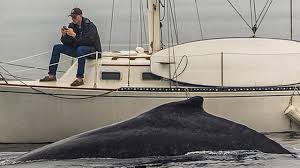
I’m like the guy caught on camera in Redondo Beach, CA, who missed seeing a humpback whale two feet from his boat because he was so enthralled with what was on his mobile phone. In fact, whenever I do this, which is often, my wife says, “You’re being the whale guy.” And, of course, she’s right.

What was the worst job you ever had?

The one after I stopped being a sports writer. I used to go to Super Bowls, the World Series, Final Four, and more. My Dad said, “Enjoy it because one day you will have to work for a living.” Of course, he was right, too.

How short is your attention span?

Huh?

Tagged with IBM, IBM Amplify.

April 30, 2016 by Jeff Hasen.
  • April 30, 2016
  • Jeff Hasen
  • IBM
  • IBM Amplify
  • Post a comment
Comment

Notes From A Mobilized Marketer - Wee-Wee Pads? Rover Actually Wants An iPad

NPR said that soon we might be sharing our gadgets with our pets, too. My three spoiled (human fault, not theirs) dogs want high-resolution smartphone screens and an iPad to go next to the wee-wee pads.

My frustrations with Apple Watch are well documented. With word that all Apple Watch apps must be native apps (built for the device) starting on June 1, I’ll say great rather than it’s about time.

If you missed National High Five Day last week, rest easy. Next up is National Fist Bump Day in June. #ridiculousness

Nine in 10 US smartphone owners use location services on their phone, according to data from Pew Research Center.

Smartphone owners use on average 26 apps and 52 mobile sites per month, Forrester reported.

59% of consumers have higher expectations for customer service today than last year: Microsoft. It used to be that you can manage public opinion in two hours. Now it’s closer to two minutes.

I asked Siri how much grass should you let a dog eat. Twice, she returned with "I found 15 restaurants. Tell me the one you are looking for"

The Yankees are offering a food-purchasing app, but only 20% of Stadium patrons can use it.

One-fifth of millennials don't use a desktop PC, per comScore.

It has come to this – a "smart mattress" will tell you if you're being cheated on.

The average mobile gamer is 36 years old, Nielsen says.

Approximately 10% of internet users are mobile-only: Accenture.

84% of mobile time spent is on just 5 apps, according to Facebook.

Cracker Jack has replaced its toy prizes with digital codes for games.

This year, mobile game revenue will surpass console and PC gaming, per new study: Newzoo BV.

92.5% of internet users in China had downloaded music apps to their smartphone, per Tencent Penguin Intelligence.

Tagged with NPR, iPad, Apple Watch, smartphones.

April 24, 2016 by Jeff Hasen.
  • April 24, 2016
  • Jeff Hasen
  • NPR
  • iPad
  • Apple Watch
  • smartphones
  • Post a comment
Comment

Notes From A Mobilized Marketer - How McDonald's Views Choice As The Killer App

For 43 years, the slogan from McDonald’s said,  “You deserve a break today.” These days, when it comes to patrons accessing product information and offers, the quick service restaurant believes that we deserve choice. Despite an impressive 10 million mobile app downloads, McDonalds has installed kiosks in its restaurants, too, giving options to its customers beyond cellphones and the traditional information found on boards behind the cashiers.

An example of my Apple Watch frustration? A gate change that doesn't come with tap when that’s exactly what's needed. Now, you have to notice. And often don't.

Mobile captures 2 out of every 3 digital media minutes in the U.S., per comScore.

One in five U.S. households have bought groceries online in the past month, according to eMarketer.

Apple will likely sell its one billionth iPhone later this year.

This is permission-based, but still raised more than one eyebrow - when you open the Domino’s app, it automatically sends you a pizza unless you cancel within 10 seconds.

78% of food shoppers say they want to save as much money as possible via mobile, according to Gfk. This is one constant in wireless era – pre-recession, during recession, post-recession, people want deals.

75% of consumers say relevancy matters when it comes to the rewards that businesses provide: Colloquy. The others didn't understand the question?

British mobile phone users’ movements could be sold for profit, as reported in The Guardian. That brings worries that location data will be used by criminals.

10 million did their taxes on mobile last year with Intuit.

Microsoft CEO Satya Nadella says that the secret to a harmonious life is to stop obsessing over your smartphone. Many of us know this but won't/can't/don't believe that we can do anything about it.

Native ads will make up 63% of mobile display ad spend by 2020, a Facebook & IHS study finds.

52% of users view push messages as annoying, according to Localytics. Better practices, more value and education are keys to improving that number.

My eye doctor was appalled when I told him that his vendor was sending appointment text reminders at 4 a.m. to people who haven’t opted in. We will see if anything changes.

Tagged with Apple Watch, McDonald's, Apple, iPhone, Dominos.

April 10, 2016 by Jeff Hasen.
  • April 10, 2016
  • Jeff Hasen
  • Apple Watch
  • McDonald's
  • Apple
  • iPhone
  • Dominos
  • Post a comment
Comment

Notes From A Mobilized Marketer - The Confusion Around Mobile's ROI

Few argue with the idea that more dollars will flow into mobile when we can get more clarity into the results of our efforts. But two studies apparently show how far we have to go. 67% of marketers told Forrester that they can't measure mobile's ROI. But 77% told Salesforce that they can.

Which is it?

Diving further into the Forrester study, we see that only 20% say that they have adequate mobile budget. Yet, as mentioned, 2 in 3 aren’t sure if it’s working or not.  I would love to be in on the conversations when these marketers are asked to justify the budget expenditures.

15% of Americans are “cord cutters” who used to have cable or satellite TV but now don't, per Pew.

The Associated Press – and therefore all of us -- will lowercase internet effective June 1. There’s more – in that same timeline, AP will lowercase web in all instances – web page, the web, web browser, etc.

A “suggested” Subway app in my Twitter timeline says that I can order a meatball sandwich. I haven't had one in more than 30 years. This is the best that we can do on personalization in 2016?

Along the same lines, 24% of U.S. respondents are “extremely frustrated” with restaurants for not making interactions and offers more relevant, Accenture says.

87% of B2B marketers struggle to develop compelling content, according to Forrester.

A study from Accenture finds that 60% expect the same customer experience across all touch points – from phone service to in-store & digital interactions. And that number grows every day.

Only 65% of U.S. marketers think that location data is accurate, reports the Location Based Marketing Association.

I was intrigued by a trending hashtag #IfIHadAnExtraFiveMinutes, but I didn’t so it remains a mystery.

StubHub is introducing a 360-view within app so buyers can see view seats before buying tickets.

Millennials living in their own home without kids spent 94+ hours on their PCs, tablets & smartphones in November, Nielsen says.

Tagged with Forrester, Salesforce, Accenture, Pew, Associated Press, personalization, Subway.

April 3, 2016 by Jeff Hasen.
  • April 3, 2016
  • Jeff Hasen
  • Forrester
  • Salesforce
  • Accenture
  • Pew
  • Associated Press
  • personalization
  • Subway
  • 2 Comments
2 Comments

Notes From A Mobilized Marketer - The Short-Sightedness of a 4 a.m. Text Message

The easiest way to betray trust on mobile? Follow the lead of my eye doctor’s office and send a text message at 4 a.m. to remind someone about an appointment 13 days later. Is it that hard to see the stupidity in that intrusion?

For every $1 spent on a mobile device, $30 of retail sales are influenced by mobile, per Forrester.

65% of Spotify's global streams are now on mobile devices. This covers 70 million users and 30 million subscribers.

More than 40% of the top-selling smartphone apps have no privacy policy, per Forbes.

This is the longest stretch since 2007 where I haven't felt compelled to visit an Apple Store to engage with a new product. How about you?

83% of consumers prefer a talk with a person rather than digital interaction for customer service issues: Accenture.

Marketers need to move from “measuring and marketing to devices, to marketing and measuring people,” according to ESPN’s David Coletti. I devote a section of my The Art of Mobile Persuasion book to ESPN’s moves toward even more personalization.

Apple Pay is coming to mobile websites later this year, according to several reports.

Starbucks says that it is within "30 to 45 days" of releasing a Windows mobile app.

Google has added ride-sharing tab to Maps for iOS.

We might have to start a drinking game every time we hear the term mobile moments. It is the new The Year of Mobile repeated-by-all phrase.

I asked my 22-year-old niece if she knows anyone who owns an Apple Watch. "Only some parents. No one my age," was her response.

Juniper Research predicts app advertising will top $44 billion by 2020, up from $13 billion last year.

CBS plans to sell one of its radio division. Several of the stations ran pioneering mobile campaigns that tapped into listener loyalty.

Tagged with CBS, Forrester, Spotify, Microsoft, The Art of Mobile Persuasion.

March 27, 2016 by Jeff Hasen.
  • March 27, 2016
  • Jeff Hasen
  • CBS
  • Forrester
  • Spotify
  • Microsoft
  • The Art of Mobile Persuasion
  • Post a comment
Comment

When "You Did It" Prompt Made Me Feel 10 Feet Tall

One of the stories that I recently shared at SXSW includes my reaction to the first tap on my wrist from the Apple Watch. It was no laughing matter then, but it brings chuckles now.

Please check it out and laugh along.

March 14, 2016 by Jeff Hasen.
  • March 14, 2016
  • Jeff Hasen
  • Post a comment
Comment

Notes From A Mobilized Marketer - Facebook Drives Mobile Video Growth

Robots and virtual reality advances aside, my SXSW experience was heavy on results and opportunities around mobile video.

On the live streaming side, we now know that last year’s SXSW darling Meerkat was forced to change its business model with the appearance of Facebook Live and the adoption of Periscope.

It was Facebook’s moves and associated metrics that especially caught my attention over the last few days:

As shared by a company executive, 100 million hours of video are viewed every day on Facebook. Mobile is a large driver.

Ninety percent of the views on Facebook for the Straight Outta Compton trailer were on mobile.

The trailer for Furious 7 had 100 million views on Facebook, with an undisclosed but high number on mobile devices.

Approximately 2.2 million people watched the Facebook Live stream of Peyton Manning’s retirement announcement. This came despite the fact that the event was shown on a variety of television and online outlets.

Facebook has long viewed mobile as its biggest growth opportunity. Clearly video is key to the company’s aspirations.

Elsewhere:

Of the gazillion people at SXSW, no one brought a better in-flight Wi-Fi solution. Damn.

In a panel on beacons, Clorox's Sarah Ortman said that a brand’s mobile outreach in store should solve a problem or delight a consumer.  Or both.

Despite the hype, I didn’t see many robots at SXSW unless you count those who stayed out until 4 a.m. and were forced to attend early morning panels.

The majority of McDonald’s U.S. business is via the drive thru, making mobile solutions more important. The company had a large presence in Austin.

In the UK this year, mobile ad spending will surpass TV spending as well as desktop spending, according to eMarketer

Half of all debit card holders don't believe it's safe to use their card for online purchases, Kantar reported. I wonder what these people would say about using a smartphone to make a purchase. Likely, no, thanks.

In 2015, Apple sold 441 iPhones per minute.

Tagged with SXSW, Facebook, Meerkat, Clorox, iPhone.

March 14, 2016 by Jeff Hasen.
  • March 14, 2016
  • Jeff Hasen
  • SXSW
  • Facebook
  • Meerkat
  • Clorox
  • iPhone
  • Post a comment
Comment

Some Will Be “First” At SXSW, But How Much Does That Matter?

Be it the Internet of Things, the smart home, virtual reality or something else, change is coming.

The next big stage is this week’s SXSW Interactive, where check-in pioneer Foursquare (which has since morphed) and Oculus Rift, a virtual reality gaming headset, were introduced.

It’s also where Meerkat won the day in 2015 only to be forced to change its business model less than a year later when it was overtaken by Twitter/Periscope and Facebook Live.

Apple co-founder Steve Jobs said that innovation separates leaders from followers. Serial entrepreneur Jason Calacanis says, “You have to have a big vision and take very small steps to get there.”

The pace is in dispute, but the need to advance technologies and find new ways to engage with the near always-on user is universal.

But how? And what shape does that take?

“If you (as a marketer) have a real specific need for doing it and you think it's going to solve a problem, being an early adopter (of technology) is great,” longtime marketer Jonathan Stephen told me in an interview for my The Art of Mobile Persuasion book (www.artofmobilepersuasion.com). “You are quick to fail and quick to being successful. There are others out there who think this can be an enhancement to an experience and maybe those are the ones who don't necessarily jump on the early bandwagon but they continue to see as the technology improves itself, that they will adapt over time and a lot of the kinks will have been worked out. Best practice would have been created and they would have followed those guidelines.

“It really depends on the position that you're in. If you've got the capital to do that kind of investment, by all means I always think that being an early adopter is fantastic but you have to be prepared to fail. You're not going to get it right the first time (all the time). No one ever has.”

Sometimes being second, third or later has its advantages.

WhatsApp, built by former Yahoo employees as a text-messaging alternative, is a cross-platform mobile messaging app that allows users to exchange messages without having to pay for SMS. In 2014, Facebook purchased the company and access to more than 600 million active users for $19 billion.

“I always use the phrase, ‘I may not be early to the party but I always like to make an entrance,’” Stephen said. “Sometimes there are technologies out there and I wasn't the first to get to it but I definitely want to make sure that I get noticed when I launched that technology. It takes a lot of thought. It takes a lot of strategy in terms of what is behind it. It takes a lot of humility to take a step back and realize where you will be successful and where you want there to go.

“There will be a lot of successes and a lot of failures. You learn that over time. But more than anything it goes all the way back to that business strategy.”

Others who I talked to for the book view things in similar ways.

Curtis Kopf has seen – and been part of innovation – in large enterprises including Microsoft, Amazon and Alaska Airlines.

At Amazon, he was part of a hand-picked 14-person team in the U.S., Europe and Asia that scaled and extended “Search Inside the Book,” a discovery tool that searches and displays the full contents of hundreds of thousands of books from domestic and international publishers.

“Every company wrestles with this,” Kopf told me when speaking of innovation.  “We all come from different places whether you are an airline, a bank, or Amazon.com.  I've experienced the spectrum of companies based on their business model and who they are have different comfort levels and appetites.

“Amazon.com is going to be a company that makes really big bets -- things that may not materialize for five years or seven years, even ten years. Other companies won't view the world that way.”

Everyone, Kopf said, has a place.

“There's definitely a continuum of innovation and then there are obviously companies out there that are category creators,” he said. “Clearly a lot of the companies that we think of innovators weren't first. Obviously Google wasn't the first search engine (in fact, 20 were launched earlier, according to Wikipedia). They just did it in a new and better way. Apple definitely wasn't the first to do a smartphone. They just did it in a new and better way.

“Innovation is talked about so much that it is almost become meaningless. Every company on the planet says that they are innovative. It's part of their mission statement. Obviously as consumers we all interact with these brands and the truth is that they are not all innovative.”

 “Being first is great. There are times that being first could be really important. If you can get it an advantage that you can sustain, there's some buzz and credit that you get from customers by introducing something first. But I don't think innovation in and of itself means being first. It could be taking something that someone else started and doing it in a new way.”

What should we expect to see in Austin this week and what should be our SXSW takeaways?

 “South By (Southwest) has an interesting mix of what are perceived to be cutting edge talks or technologies that are really pretty basic,” Sean Bartlett, a former senior Lowe’s executive who is now Worldwide Industry Lead for Retail at Apple, told me.

“There is also the technology itself which is interesting. And then, what I think is most important, with respect to what I've taken away from South By in the few times that I've been there, is more cultural and how you think about things.

“One of the things that I took from a panel a couple of years ago that has actually become a guiding principle of the team is this notion of commitment to craftsmanship. I saw a panel of well-known startup CEOs talking about their products. One of the things that really hit home was how they talked about craftsmanship and quality of the product and the overall experience. It’s a true cultural takeaway that you can bring back and put in effect immediately. You come back from the show and on a Monday you can really start to drive that message home. That's one that always sticks out when I think about that particular show.”

Tagged with SXSW, Jonathan Stephen, Curtis Kopf, The Art of Mobile Persuasion.

March 6, 2016 by Jeff Hasen.
  • March 6, 2016
  • Jeff Hasen
  • SXSW
  • Jonathan Stephen
  • Curtis Kopf
  • The Art of Mobile Persuasion
  • Post a comment
Comment

Notes From A Mobilized Marketer - MLB is Big League With Mobile App

It isn’t called the major leagues for nothing. Major League Baseball had 8.4 billion minutes streamed to its mobile app in 2015, per comScore. A total of 53% of the total minutes consumed were in the At Bat app with users watching or listening to games. The activity was more than than in all other U.S. official sports leagues apps combined.

Nearly one in four shoppers say that they have changed their minds while in a checkout line after looking up details on a smartphone: Google.

Meerkat is dropping the livestream. It’s a cautionary tale for those looking at "solutions"at SXSW that may be shiny and not stand test of time,

Headline: Retail Executives Say Mobile Investments to Increase This Year. Me: you don't say.

Two weeks after calling for an Apple boycott call, Donald Trump was using an iPhone to send half of his tweets: Marketing Land.

A man with a gun while taking selfies fatally shot himself in Concrete, Washington, police say. Interestingly, the Russian government has issued a guide to discourage people from taking dangerous selfies.

Consumers’ use of health apps and wearables has doubled in the past two years, according to Accenture.

After all this time, Apple has now opened a Twitter account to answer tech questions and to deal with problems.

I read a story that predicted: "When you tuck your iPhone 9 into your back pocket, it may well flex to conform to the contours of your butt" I can only say yay.

One in 10 U.S. Internet users (31.1 million people) will be mobile-only this year, eMarketer reported.

Mobile payments make up only 3% Of U.S. transactions, per GfK. Weren’t we told that cash would be gone by some Tuesday in 2015?

Tagged with MLB, At Bat, Meerkat, Google, SXSW, apple, selfie.

March 6, 2016 by Jeff Hasen.
  • March 6, 2016
  • Jeff Hasen
  • MLB
  • At Bat
  • Meerkat
  • Google
  • SXSW
  • apple
  • selfie
  • Post a comment
Comment

Three Damning Words For Marketers Proceeding With Yesterday’s Thinking

Hard words rather than hardware are what marketers should chiefly remember from the recently concluded Mobile World Congress.

Sandwiched in Barcelona between the new phones, wearables, and virtual reality gear was straight talk from Martin Sorrell, chief executive of advertising group WPP.

Speaking of what he called a “mobile revolution”, Sorrell admonished marketers for yesterday’s thinking.

"We haven't adapted," Sorrell said from figuratively and literally a global stage. "When people talk about creativity in our industry, they're talking about Don Draper. They're not talking about the new definitions. Believe it or not, people inside media agencies are creative. Software engineers are creative ... It's the definition of it -- we haven't contextualized it correctly yet.”

Sorrell’s comments mirror those that I shared from Hank Wasiak in my The Art of Mobile Persuasion book (http://artofmobilepersuasion.com).

Wasiak, the former vice chairman of McCann Erickson and now partner in The Concept Farm, told me:

“I challenge you to walk into an agency, say that you are going to do a campaign and say ‘give me your ideas in about 3 hours’.  Not one is going to optimize around the mobile experience.  I'll give you $1,000 if you find one. (Instead) they still say ‘here's a great commercial.’

“They look at mobile as more of a delivery device for their creative work.  It is supposed to be something where they can creatively integrate their ideas. Mobile is just a big turnaround for them and then they don't get it yet.”

In Barcelona, Sorrell credited smaller entities with some success in getting closer to the customer via the wireless device.

"The essential problem is that big companies are not thinking about mobile in the right way," Sorrell said. “They're thinking of it as an extension of digital, just a way to reach consumers. They're not thinking of it in a way that changes their businesses or adds values in a way they weren't able to do previously."

 “Probably the mobile revolution has not registered yet with companies, although it might have registered more ironically with the long tail then it has with larger companies. But it still has not penetrated companies to the degree it should have.”

Earlier, Wasiak told me that the era demands “a totally new and dynamic marketing landscape”.

“There's a difference between engaging with a human being and having a human experience,” Wasiak said in The Art of Mobile Persuasion. “Any company, brand or retailer should make believe that they are having a FaceTime call with them. It's the next best thing to being there. You're on FaceTime. I called, you've accepted. You see me, you know what I want. You know the situation that I'm in. I can tell by the tone of your voice and the look on your face how you feel. If you can try to draw those pictures in your mind through data, it’s better to get that attitude that I'm having a FaceTime call. This just isn't a digital connection.

“Smartphone-enabled consumers have kicked open the doors to a totally new and dynamic marketing landscape. This is first time in my 50-year marketing lifetime that we have the opportunity to be in service to the consumer virtually any time or any place in their daily lives. An awesome opportunity that comes with a huge responsibility.”

And, to date, with harsh assessments from industry pioneers.

(first published on imediaconnection.com - http://blogs.imediaconnection.com/blog/2016/02/27/three-damning-words-for-marketers-proceeding-with-yesterday’s-thinking/)

Tagged with Martin Sorrell, Hank Wasiak, The Art of Mobile Persuasion, Mobile World Congress.

February 28, 2016 by Jeff Hasen.
  • February 28, 2016
  • Jeff Hasen
  • Martin Sorrell
  • Hank Wasiak
  • The Art of Mobile Persuasion
  • Mobile World Congress
  • 2 Comments
2 Comments

Notes From A Mobilized Marketer - Remembering and Reaching The Forgotten Mobile Users

Lost in the glitzy introduction of new smartphones at Mobile World Congress is the fact that 35 percent of U.S. mobile users still carry a feature phone. And, according to new research, that percentage won’t change in a meaningful way anytime soon.

Kantar reported that more than half of current feature phone users say that they won't upgrade to smartphone in the next year or are unsure if they will do so.

Feature phone owners tend to be older, are more likely to be retired, and often have a limited income. Unreachable for mobile marketers? Hardly. Mobile loyalty club that use text messaging enable all to participate. And young and old are looking for deals and value. Those programs often lead to sales and a boost in loyalty.

In a sobering study by Duke’s The Fuqua School of Business and others, 40% of CMO’s surveyed say that mobile has made zero contribution to their businesses. Yet the same group says that the spend on the channel will increase 147% in three years.

Nissan disabled its smartphone app after hackers use it to control a Leaf electric car, per Yahoo news.

It amazes me how many marketers even now have no clue that you can't buy a list and just send texts to mobile users.

As the talk and hype build for 5G, it was reported at Mobile World Congress that 4G is in more than 150 countries and will cover two thirds of the population by 2020.

Headline in the Huffington Post: Beacon Use in Retail Stores Will Be Just as Common as Cash Registers. Me: more hype, plus it’s important to note that the number of registers is on the decline with other point of sale systems being adopted.

Only 0.3% of mobile owners use ad blockers, according to M&C Saatchi's CEO James Hilton.

Fifty percent of brands surveyed by the Rubicon Project predict that they will be spending 81-100% of their budget this year in programmatic private marketplaces.

It’s two months into the year and the mobile loyalty clubs that I belong to haven't moved any closer to personalized communications. #dejavu.

Instagram has over 200,000 advertisers in its first five months of operation.

Speaking of ROI, 44% in an eMarketer poll say that the lack of definitive return on investment is holding back wearables.

In 2020, you will be able to fill out your census form on your smartphone, Pew said.

Coca-Cola created packaging that converts into a Google Cardboard-style virtual reality viewer for the iPhone.

Tagged with feature phone, Kantar, Coca-Cola.

February 28, 2016 by Jeff Hasen.
  • February 28, 2016
  • Jeff Hasen
  • feature phone
  • Kantar
  • Coca-Cola
  • Post a comment
Comment

Notes From A Mobilized Marketer - Remembering And Reaching The Forgotten Mobile Users

Lost in the glitzy introduction of new smartphones at Mobile World Congress is the fact that 35 percent of U.S. mobile users still carry a feature phone. And, according to new research, that percentage won’t change in a meaningful way anytime soon.

Kantar reported that more than half of current feature hone users say that they won't upgrade to smartphone in the next year or are unsure if they will do so.

Feature phone owners tend to be older, are more likely to be retired, and often have a limited income. Unreachable for mobile marketers? Hardly. Mobile loyalty club that use text messaging enable all to participate. And young and old are looking for deals and value. Those programs often lead to sales and a boost in loyalty.

In a sobering study by Duke’s The Fuqua School of Business and others, 40% of CMO’s surveyed say that mobile has made zero contribution to their businesses. Yet the same group says that the spend on the channel will increase 147% in three years.

Nissan disabled its smartphone app after hackers use it to control a Leaf electric car, per Yahoo news.

It amazes me how many marketers even now have no clue that you can't buy a list and just send texts to mobile users.

As the talk and hype build for 5G, it was reported at Mobile World Congress that 4G is in more than 150 countries and will cover two thirds of the population by 2020.

Headline in the Huffington Post: Beacon Use in Retail Stores Will Be Just as Common as Cash Registers. Me: more hype, plus it’s important to note that the number of registers is on the decline with other point of sale systems being adopted.

Only 0.3% of mobile owners use ad blockers, according to M&C Saatchi's CEO James Hilton.

Fifty percent of brands surveyed by the Rubicon Project predict that they will be spending 81-100% of their budget this year in programmatic private marketplaces.

It’s two months into the year and the mobile loyalty clubs that I belong to haven't moved any closer to personalized communications. #dejavu.

Instagram has over 200,000 advertisers in its first five months of operation.

Speaking of ROI, 44% in an eMarketer poll say that the lack of definitive return on investment is holding back wearables.

In 2020, you will be able to fill out your census form on your smartphone, Pew said.

Coca-Cola created packaging that converts into a Google Cardboard-style virtual reality viewer for the iPhone.

Tagged with feature phones, featurephones, Mobile World Congress, Coca-Cola.

February 28, 2016 by Jeff Hasen.
  • February 28, 2016
  • Jeff Hasen
  • feature phones
  • featurephones
  • Mobile World Congress
  • Coca-Cola
  • Post a comment
Comment

Notes From A Mobilized Marketer - Another Reason To Smile At The Selfie

Despite its negative reputation in some circles, I will argue that the selfie has done more to drive smartphone adoption and bring people closer than any other recent product enhancement. I came across another reason to smile:

Until March 14, Disney Parks will donate $5 to Make-A-Wish – up to $1 million – for every “ear photo” shared on Facebook, Instagram or Twitter with the hashtag #ShareYourEars. What kind of ears? “Cool ears. Funny ears. Mickey Mouse ears. We want to see them all!”

So show ‘em.

Customizing vehicles and watching a video on a manufacturer’s website are the most common activities on desktops for vehicle-shopping individuals, per Ipsos. On mobile, Nos. 1 and 2 are reaching out to family and friends and reaching out to a dealership or salesperson.

Ninety percent of smartphone users have used their devices to find a location, per Pew. The activity upended the free-standing and pricey navigation units that we no longer use or want.

Gizmodo reported the availability of the first smartphone with built-in FLIR thermal vision that can also survive a hurricane. The line of people is short for such a “need”.

Yahoo's Simon Khalaf says that we're at the end of Mobile 1.0 and we're entering Mobile 2.0. Let’s commit to punching anyone who calls 2016 The Year of Mobile 2.0.

More from Khalaf: time in the mobile browser decreased from 20% to 9% since 2013.

Emergency room visits by distracted walkers are up 124% in five years, reported The Wall Street Journal.

LinkedIn should block users from sending generic invites to connect. Someone needs to save these dolts from being stupid and lazy.

An Adweek infographic showed that 32% use tech or an app to track exercise. But left unanswered is whether others don’t exercise or just not track.

After all these years and successes, do we still need stories about the importance of building a mobile loyalty club though SMS opt-in? It isn't that I question the notion that these clubs are valuable. But are we still at such elementary how-to stage?

Eighty-two percent of TV ad-driven searches during Super Bowl were done on smartphones, vs. 70% in 2015: Google. But only 7% on tablets as smartphones continue to eat into the use of those devices.

Tagged with selfie, Yahoo, SMS, Google, Super Bowl.

February 21, 2016 by Jeff Hasen.
  • February 21, 2016
  • Jeff Hasen
  • selfie
  • Yahoo
  • SMS
  • Google
  • Super Bowl
  • Post a comment
Comment

Notes From A Mobilized Marketer - In Wireless Era, Banks Come To Us

We used to go to banks. Now, more and more, those institutions are coming to us. Or more specifically to our mobile devices.

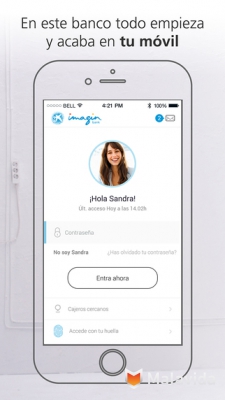
imaginBank is the first mobile-only bank in Spain and the first in the world which is operated exclusively on cell phone and social network apps, according to the GSMA, which represents mobile operators worldwide. It also has an ATM search application for smartwatches and a service to check bank accounts, transactions and bills without having to leave Facebook.

69% of shoppers who use high-tech research products on a mobile device during a store visit vs. 54% of non-high-tech shoppers, comScore reported. Also, 76% of high-tech shoppers tracked delivery on a mobile device vs. 65% of non-high-tech shoppers.

Mobile spend is now 37% of all SEM spend (up 23% YoY), per Adobe.

In 2015, only 32% of email was opened on PCs, while 68% was opened on mobile devices, Movable Ink reported.

U.S. Hispanic and African-American voters are more likely than whites to get political news via mobile: Pew

A sanctioned Ted Cruz app enables the politician to capture individuals'  location, contact list, email addresses, AP reported.

Mobile was 86% of Twitter's $641 million in Q4 ad revenue (up 48% YoY).

Mobile games reached $34.8 billion in 2015, captured 85% of all app revenues, according to App Annie.

2016 will be the first year where more than half of the US population uses Facebook, eMarketer predicted.

In an international ranking of LTE download speeds, the U.S. came in 55th place, OpenSignal said.

By 2020, more people will own a mobile phone than have electricity, Cisco said in a forecast.

While lack of lots of mobile in Super Bowl ads was a missed opportunity, it didn’t take the cake on a week when a $63 million lottery ticket went unclaimed.

I came across what was billed as a mobile strategy blog with the last post 856 days ago? Nothing has changed since then, huh?

Tagged with imaginBank, Adobe, Super Bowl, Pew, Ted Cruz.

February 14, 2016 by Jeff Hasen.
  • February 14, 2016
  • Jeff Hasen
  • imaginBank
  • Adobe
  • Super Bowl
  • Pew
  • Ted Cruz
  • Post a comment
Comment

Super Bowl Advertisers Move The Ball With Mobile

The milestone that was the 50th Super Bowl will be remembered, too, for the advancements that advertisers made by including meaningful calls to action for mobile device owners.

But much like the spotty play on the field, there were clear missed opportunities and disappointments that not more was done to make the day all that it could be.

If we were to do a SportsCenter-like show highlighting the mobile wins, these would be included:

NO MORE, an advocacy group that works to combat domestic violence and sexual assault, maximized the moment by building a mobile database with a powerful commercial that follows a text message conversation between two friends. A woman’s reluctance to come to a Super Bowl party at a friend’s house, after missing a few social occasions, coupled with her silence when questioned about her well-being, raises concern for her safety. Texting was used to point out one of the many signs of domestic violence, namely her inability to talk about an abusive relationship.

The spot ends by calling on viewers to “TEXT ‘NO MORE’ TO 94543.”

For a limited time beyond Super Bowl 50, people who opted into the text program will receive action-oriented messages educating them on common signs of abuse and steps they can take to help victims of domestic violence and/or sexual assault. The texts will also reinforce the message that “you don’t need be an expert to get involved, you just need to be a friend.”

Why was this message so, pardon the pun, spot on?

NO MORE has found that 64% of Americans say that simply starting a conversation about domestic violence and sexual assault would make it easier to help someone.

Also, as we know, Gallup and others report that texting is a dominant way of communicating for Americans under 50.

Interestingly, the cost of the airtime and production was covered by the National Football League.

Elsewhere during the telecast, just before the game began, Esurance launched a contest where every retweet of a specified hashtag was entered into a sweepstakes. It was a good start in asking viewers to do something with their mobile phones. Later, it was reported that the ad generated 9,000 tweets a minute.

Separately, Quicken Loans encouraged viewers to get a mortgage via a mobile app. There was immediate backlash from The Consumer Financial Protection Bureau and others urging people to take their time with such an important process, but the availability of such an option is surely welcome to some who will want the convenience after doing their research on their phone or computer.

Finally, developer Machine Zone pushed mobile app downloads of Mobile Strike with Arnold Schwarzenegger starring in the spot.

The “misses” list was just as noteworthy:

Apartments.com had a Jefferson’s parody to encourage watchers to “move on up”, but its tagline Change your apartment. Change the world dropped the ball on the biggest change in the category, namely the fact that large numbers of apartment hunters use their mobile phones to research, view and sign leases to new places to live.

Also, viewers were entertained by wiener dogs racing to condiment bottles, but it was learned on Twitter that MeetTheKetchups had a longer director's cut. Why didn’t Heinz use television to drive traffic to a mobile web site or produce and promote a mobile app to take advantage of the buzz?

Elsewhere, we were asked to "go online to view the new Jungle Book (Disney movie) trailer". But there was no app or call to action for viewers to see more footage via opt-in. The call to action used was disappointing because it was vintage 1997.

Overall, I’d say that advertisers moved the ball in 2016. But to fully score next year and beyond, marketers must more fully acknowledge and cater to the mobile generation of viewers.

(article first appeared on Mobile Marketer - http://www.mobilemarketer.com/cms/opinion/columns/22225.html)

Tagged with Super Bowl, NO MORE, esurrance, apartments.com, Jefferson's.

February 9, 2016 by Jeff Hasen.
  • February 9, 2016
  • Jeff Hasen
  • Super Bowl
  • NO MORE
  • esurrance
  • apartments.com
  • Jefferson's
  • Post a comment
Comment

Will Super Bowl Advertisers Take Another Pass On Mobile?

In the X’s and O’s game of Super Bowl advertising, marketers have consistently taken a pass on mobile.

Sure, we’ve seen spots with Shazam calls to action and others that have asked viewers to download a mobile app, but I can’t point to one meaningful attempt to engage tens of millions or more after the Big Game is done.

The missed opportunities have been many, including this one that goes back seven years:

Some, probably many, may have had too good a time to remember, but a great deal of us among the 95 million who watched the Super Bowl in February 2009 remember the television spots run by restaurant chain Denny’s to promote free Grand Slam breakfasts. The campaign’s elements were easy to follow—all viewers needed to do was to go to a Denny’s the following Tuesday for free eggs along with toast with hash browns or grits.

Denny’s reported that approximately 2 million took advantage of the offer. Although many might view that as a success, Denny’s was left with egg on its face when quick service restaurant Arby’s did it one better two months later by building in a way to remarket to patrons through a high-profile, national television campaign.

Here’s how it worked:

To start out, for the launch of its Roastburger product, Arby’s had comedian/entertainer Jimmy Kimmel create, eat, and promote the new sandwich on Jimmy Kimmel Live, a late-night nationally broadcast TV program airing on ABC.

Viewers were urged to text the word Roastburger to short code 27297 to receive a free sandwich with the purchase of any drink. After texting, customers were asked to respond with their zip code to be entered into a local database and to receive additional offers from Arby’s. By doing this, the restaurant gained a valuable remarketable database.

As a result of the one segment:

- Arby’s received 177,745 total entries from 152,280 unique participants

- Approximately 65,000 people opted in to join the mobile loyalty club

- The restaurant created 172 local databases to cater to the opted-in customers on a hyperlocal level

Two years ago, I asked Sean Bartlett, then director of mobile strategy and platforms at Lowe's, for some perspective on the lack of mobile calls to action on Super Bowl telecasts.

“I'm going with preserving creative integrity,” Bartlett, now Worldwide Industry Lead for Retail at Apple, told me.

But can we not have “creative integrity” that includes a mobile call to action?

“Yes, though most are brand anthems, not direct response,” he said.

Last year, on a scale of 1-100, the risk that the Seattle Seahawks took at the end of Super Bowl XLIX by throwing instead of giving the ball to Marshawn Lynch at the 1 sat at 379. And we know how that turned out (the New England Patriots intercepted a pass and won the championship).

On the same scale, on the risk that the telecast advertisers chose when it comes to mobilizing their marketing messages, the number rested squarely at 0.

My belief is that with the right trigger, a Super Bowl spot lives on well beyond the stench of putrid play-calling and uneaten nachos.

It is not hard to imagine some of that from many of the commercials.

What if last year in the last seconds of an ad that was instantly beloved, Budweiser urged touched viewers to save a dog and provided a keyword and short code to be contacted after the game? Do you not think the emotional string pulled would have resulted in pet adoptions?

To me, it gets back to the question of risk.

Just what would advertisers lose if they took the last three seconds of a commercial to add a call to action for viewers to use their phones? What is the worst that could happen? No one would respond.

Will the Super Bowl 50 telecast mark a mobile milestone? On a day when more money will be wagered than any other in 2016, I’m not betting on it.

-

(article first appeared on imediaconnection.com - http://blogs.imediaconnection.com/blog/2016/01/31/will-super-bowl-advertisers-take-another-pass-on-mobile/)

Tagged with Super Bowl, Arby's, Denny's, Budweiser, Sean Bartlett.

January 31, 2016 by Jeff Hasen.
  • January 31, 2016
  • Jeff Hasen
  • Super Bowl
  • Arby's
  • Denny's
  • Budweiser
  • Sean Bartlett
  • Post a comment
Comment

Notes From A Mobilized Marketer - Acknowledging A Gap In Personalization Results

One of big opportunities for Gap is personalization "but it may not be this year. It's the holy grail" -- Caroline Sheu, the company’s VP of Global Digital Marketing, said at the excellent Mobile Ventures Summit event in San Francisco.

More from Sheu - it's apps and mobile web, not one or the other. Be everywhere the customer lives, she said.

And one last one – the best foot forward for Gap is building an app for its best customers, not one that is for all. It’s about focus and working the funnel. Others like REI have said the same thing.

One in 3 smartphone owners have streamed video via a subscription service on their phone: Pew.

Mobile accounted for 52% percent of Google clicks (including ads and organic) in the fourth quarter of 2015, per Merkle/RKG.

40% of PepsiCo's Super Bowl budget is going to digital, including Snapchat, Adweek reported.

100 million hours of video are watched daily on Facebook, the company said.

Pinterest's mobile users exceeded desktop within a day of launching the mobile app, according to the company’s Kevin Knight.

RBC's Mark Mahaney said mobile became material when it reached 20% of revenue or traffic.

Visa will brings NFC (near field communications) to all the payment terminals at Levi’s Stadium for Super Bowl 50.

As much as the media makes it out to be a sprint, mobile payments is a marathon that will take decades -- Visa's Chris Curtin, Chief Brand & Innovation Marketing Officer.

Facebook earned $5,630,000,000 in Q4 in revenue from advertising, and about 80% of that came from mobile. Mobile ad revenue was up 82% year over year.

Leaders who measure impact of their online and offline spend will allocate up to 20% of their budget to mobile – Forrester.

Broadcast advertising spending jumped 13% to end 2015, while overall TV spending was up 9%: Standard Media Index. Take note, mobile and social hypesters.

Tagged with Gap, Visa, Facebook, Google.

January 31, 2016 by Jeff Hasen.
  • January 31, 2016
  • Jeff Hasen
  • Gap
  • Visa
  • Facebook
  • Google
  • Post a comment
Comment

Notes From A Mobilized Marketer - When Smartphones Are Used By Dumb People

An Ohio fugitive who sent police a selfie because he didn't like his mugshot was tracked down and arrested. Note modern devices are called smartphones. No one says that they are used only by smart people.

56% of smartphone users purchased a product using an app in 2015: Verizon.

I’m getting more spam voice calls on mobile - way more than spam texts. WTF?

In the poorest countries, mobile phones cost 1/5 to 1/2 of monthly income. In U.S., it's under 1%, per The World Bank.

Google paid Apple $1 billion to be the search engine on your iPhone, according to court documents.

Uber usage by business travelers surpassed taxi and car rentals in 2015, VentureBeat reported.

20% of U.S. homes now have a smart TV, 56% have a tablet and 82% of people have a smartphone, Nielsen said.

Amazon now sells as much clothing as 250 Walmart stores sell altogether: Re/Code.

Uber is preparing to go live with full-scale food delivery service in 10 U.S. cities this quarter, according to The Wall Street Journal.

3.8 trillion photos were taken until mid-2011. 1 trillion photos were taken in 2015 alone, MIT SMR reported.

Headline: Less Than Half of Consumers Are OK With Swapping Data for Deals. Me: 47% who say good to go is huge.

Ken Chenault of American Express: mobile pay is not about the "tap", it's about what's the value? what's the service I get? Bingo.

U.S. smartphone users spent 3 hours in mobile apps and another 50 minutes in mobile browsers daily in 2015: eMarketer

I have made a living NOT hyping mobile yet it fascinates me when brands and others operate in waiting, non-priority mode.

Per NBC's Alan Wurtzel, just 51% of TV viewing is live.

Twitter asked me to promote my app. I don't have one. 2016 personalization seems like 2015's – or 2008’s.

Tagged with smartphone, Google, Walmart, Nielsen, Uber.

January 24, 2016 by Jeff Hasen.
  • January 24, 2016
  • Jeff Hasen
  • smartphone
  • Google
  • Walmart
  • Nielsen
  • Uber
  • Post a comment
Comment

Serving A Consumer Who Actually Wants To Be Targeted

The idea of targeting and retargeting is not new. What’s changing is the potential for cross-device targeting. We now have the capability to take the search done for an Armani necktie on a PC and use it as a trigger to send a mobile user a related communication at a later point.

But should we?

Few are as equipped to answer that question as Google’s Jason Spero, who literally has written The Mobile Playbook that is relied on by so many marketers.

“If you admire someone's shoes or their tie, in the mobile and the digital world when you didn't have connectivity at that moment, you would file it away in your head or make a note to yourself,'” Spero said in an interview for my book, The Art of Mobile Persuasion.

“As human beings, we've always had impulses, fears, hopes. What happens when you see that tie, you have connectivity. You can act on it in a way that you couldn't in previous eras. The idea of persistent connectivity makes it possible for you to act on all those impulses. You may not act on all of them. It's probably a bad thing if you act on them all because you are probably buying stuff that you don't need and tweeting out stuff that people don't want to read. But the idea of connectivity means that you can.”

“The consumer knows that he or she is connected and empowered in all these ways,” Spero explained. “The consumer's expectation is they want an easy way to buy an Armani tie if they decide to. And that's a combination of the Macy's app and Google search and maybe image search in time. Lots of different things will fuel that. But all are powered by the idea that you have a broadband connection with you constantly.

“The consumer also knows that their device has a sense of geospacial relations. You as a consumer know that with your device at any point, with a couple of exceptions, it can tell you what's around you to help you solve problems. You can go out and get the world's information with your connection or you can map the physical world around you.  You know the nearest place to get a hamburger. Or which subway will get you to the Upper East Side. Or what the check-in time is at your hotel. All these things are now available to you: the digital world and the physical world at your service.”

And with that, Spero said, comes a need for marketers to look at the world differently.

“If you start to talk about it as a commercial journey, we used to in the digital world sort of be satisfied if you will with engaging the consumer throughout her digital journey,” he told me. “But because we just said that the consumer journey is in and out of the physical worlds, presumably across many different devices, the digital experience now has to evolve.”

Ryan Craver, former Senior Vice President, Strategy, of Hudson’s Bay, told me in a The Art of Mobile Persuasion interview that he believes that targeting and retargeting is all about catering to the consumer.

Said Craver, who brought innovation into Lord & Taylor among other efforts: “If you are shopping Armani on your mobile phone, or searching for it on your mobile phone, or on your desktop computer the night before, and then you bring yourself into retailer: as long as you've been asked up front, ‘Are you willing to share your location, are you willing to share past browsing behavior?’ and then the marketer provides the customer something as part of the ad—perhaps a discount or exclusive content or something else--I think people are slowly but surely coming around to understanding that that is the way in which marketing is going to be served. It is also something that you need to pay attention to in terms of how often you send it, and how frequently you come after them.”

Another example of what Craver thought about when he started using beacons to know that opted-in users are in the brick and mortar location: “We thought a lot about cart abandonment online and how frequently we need to do something similar in stores. Certain online stores on cart abandonment, like Amazon, will hit you up the day after, hit you up seven days after, and hit you up maybe two weeks after. There are other stores, like Urban Outfitters, that will even hit you up six months later.”

So Craver and his team set business rules.

“For us as a retailer, when you come in for that Armani, if we hit you once and then we hit you two visits later, we thought that might be a bit alienating and reaching too far back,” he said. “But if it's immediate, meaning it was within the last couple of days, I think it's worthwhile. I think people are becoming desensitized to Big Brother and to this creepiness factor.”

And, surprising to some, people don’t mind being targeting. In fact, under the right circumstances, they might even welcome it.

(article first appeared on imediaconnection.com - http://blogs.imediaconnection.com/blog/2016/01/18/serving-a-consumer-who-actually-wants-to-be-retargeted/)

Tagged with The Art of Mobile Persuasion, Jason Spero, Google, Ryan Craver, Lord & Taylor.

January 22, 2016 by Jeff Hasen.
  • January 22, 2016
  • Jeff Hasen
  • The Art of Mobile Persuasion
  • Jason Spero
  • Google
  • Ryan Craver
  • Lord & Taylor
  • Post a comment
Comment

Was CES 2016 An "Exercise In Wishful Thinking"?

More than 170,000 attended CES last week, yet the only one that matters was nowhere to be found among more than 2.5 million square feet of packed aisles and shiny objects.

The consumer doesn’t qualify for entry to the businessperson-only show. And while we would hope that all products – from robots to drones to smart appliances and more – were built based on solid end-user insights, that notion is as likely as 95 percent of what was shown becoming runaway hits.

The most astute comment of the week came from David Pogue, longtime consumer electronics pundit, who said, “CES is not a store; it's an exercise in wishful thinking.”

So what wins?

“The consumer is going to decide,” Sean Lyons, U.S. President of R/GA, told me in an interview for my The Art of Mobile Persuasion book (www.artofmobilepersuasion.com). “I think a lot of these early thoughts about how things will be used are wrong often. And it's not because people aren't intelligent. It's because we haven't really found what the behaviors are yet.”

Said Target CMO Jeff Jones on Facebook:

“The consumer will win with choice for sure…but as of now, people will have to choose a “platform” or an “ecosystem” that they buy into for all of their products. We’ve been here many times…Beta vs VHS, iOS vs Android, Mac vs PC, etc.”

Here are more of my thoughts on what I found in Las Vegas:

Samsung has advanced the concept of a refrigerator with the introduction of the

"Family Hub" unit that enables users to gauge supply and order from a screen in the door that also offers up recipes. There is even a corresponding smartphone app that gives owners in a supermarket or elsewhere a real-time view of what’s on the shelves and what is absent. But the expected $5,000 price tag puts all but the top one-percent or so out in the cold.

Drones and Virtual Reality caught the eye of many show goers. What grabbed my attention was the prediction by the International Robotics Federation of 35 million units of “service robots” to be sold in the next three years.

“Robots are going to be as popular as cars, machines and airplanes,” predicted Alibaba Group Chairman Jack Ma.

Rather than more employing a robot to clean a floor, for instance, the growth is expected to be driven in large part by the introduction of products to provide assistance for the elderly and handicapped.

According to a story published by the Consumer Technology Association, a recent Georgia Institute of Technology study found that a “surprising number” of seniors (aged 63 to 93 years) would prefer to have a robotic assistant for household tasks rather than a human helper.

As expected, there were lots of exercise trackers. But how many not only gauge movement and rates, but provide context on what the numbers mean? None that I saw.

Speaking of trackers, there seemingly every kind of tracker imaginable, but not one that can tell the Browns where Johnny Manziel is - and whether he is in beard and wig.

-

(article first published on imediaconnection.com - http://blogs.imediaconnection.com/blog/2016/01/11/with-the-consumer-absent-much-of-ces2016-was-exercise-in-wishful-thinking/)

Tagged with CES, CES2016, The Art of Mobile Persuasion, Target, David Pogue.

January 11, 2016 by Jeff Hasen.
  • January 11, 2016
  • Jeff Hasen
  • CES
  • CES2016
  • The Art of Mobile Persuasion
  • Target
  • David Pogue
  • Post a comment
Comment
Newer
Older

Jeff Hasen

Mobile CMO and Author
  • Blog
  • About
  • Speaking
  • Books
  • Mobile Education & Training
  • Professional Services
  • Contact

Powered by Squarespace.  Content is for demonstration purposes only.